Higher-for-Longer Rates Drive Appeal for Cash Deals
Interest rates have been on a rollercoaster ride over the past decade. The Fed Funds rate peaked above 5% in 2006-07 before flattening from 2009-15, when inflation was almost nonexistent in the wake of the Great Recession. That was followed by a bump above 2% in 2019 as the economy started to recover, and another near-zero stretch when Covid slammed on the brakes. With inflation roaring during the post-lockdown rebound, a bout of rapid tightening started in 2022 and sent rates back above 5% from mid-2023 to mid-2024.
With the Fed Funds range ticking up to 3.75%-4.00% as of the Federal Reserve’s September meeting, consumers in general and the commercial real estate market in particular are left feeling queasy from the ride. While those interest rate increases were anticipated and already baked into the market, inflation remains above the Fed’s target of 2%. The hopes from last year for as many as three rate cuts in 2026 were overly optimistic; the likelihood is now for another increase at the October meeting.
STAY ON TOP OF THE MARKET
Subscribe to R.O.I.'s Real Estate Newsletters to get the latest news on Arizona's real estate trends.
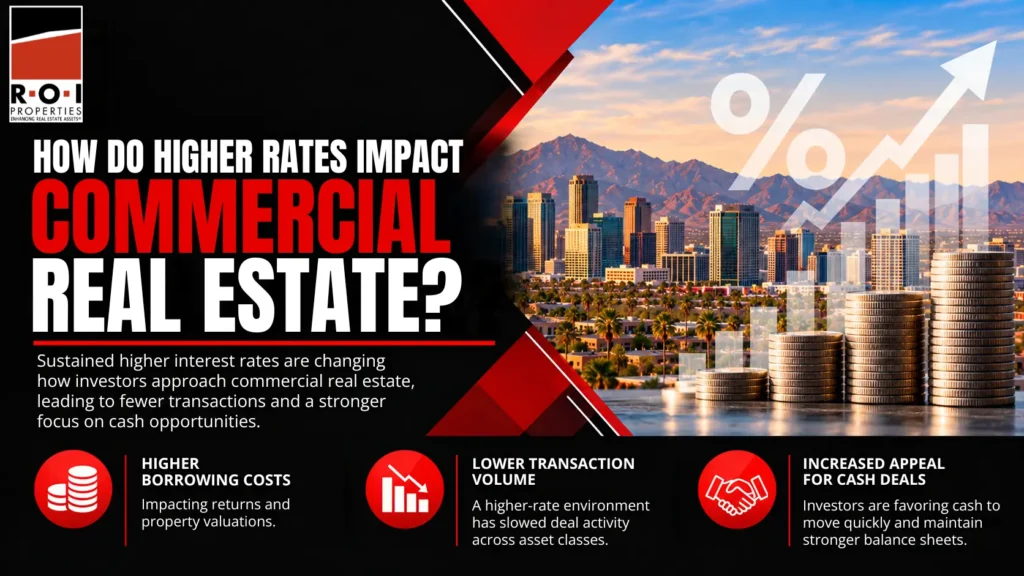
How Do Higher Rates Impact Commercial Real Estate?
The extended period of higher-for-longer interest rates has had several key impacts on CRE:
- Increased borrowing costs
- Lower overall return expectations/profitability
- Difficulty refinancing/overleveraged properties on floating-rate loans
- Decreased property valuations
Add them all up, and the net effect has been a lower volume of overall transactions on the commercial side. Rates have affected all product across all investment asset classes, including office, industrial, retail, multifamily, and also single tenant triple net deals. Retail seems to be faring the best. In Greater Phoenix, there is some seasonality at play, since more people spend time out of town and it may slow transactions a bit. The truth, though, is that finding and executing deals doesn’t depend on whether it’s summer, fall, winter or spring.
Real Estate vs. the Stock and Bond Markets
Another factor is that many investors view real estate as an alternative to stock market or bond transactions—so the appropriate returns need to be there. With 10-year Treasury yields above 5.1% for the first time in almost two decades, for example, that is creating competition for investor dollars. In addition, higher interest rates may encourage many to opt out of financing; leverage can decrease returns as interest rates increase. In such cases, investors need to obtain a higher cap rate in the marketplace to compensate for the higher risk, sending prices down, since they are inverse to cap rates.
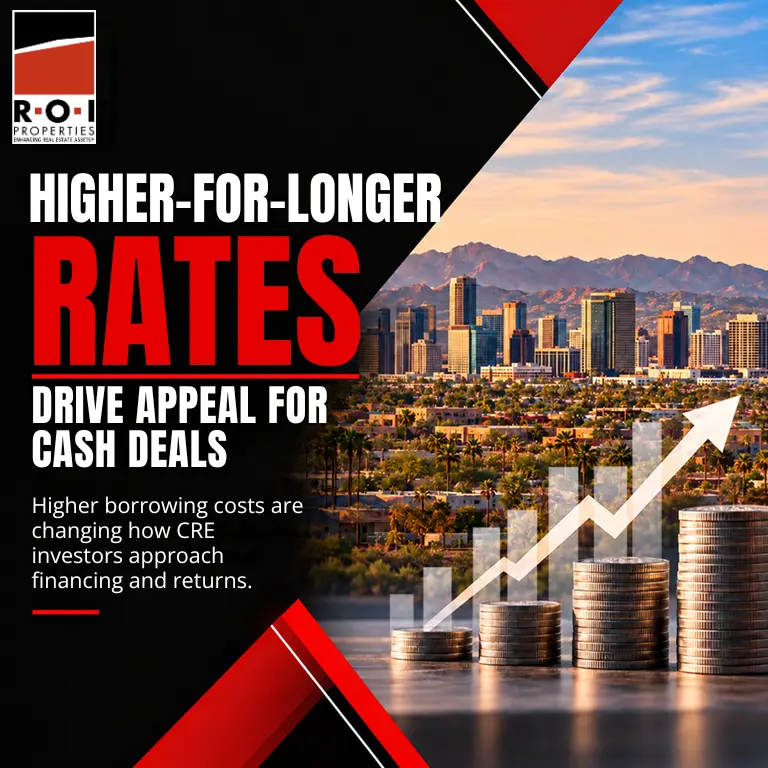
Overall, the high-rate environment is driving more cash deals and fewer financed deals on the investment side. There are advantages from a negotiation standpoint, such as fostering the ability to get to a better deal quicker. In addition, without adding leverage, the balance sheets on their properties look healthier.
Learn More About Our Full-Service Brokerage Firm
Contact Us